

Market Overview
At the time of writing in June, the good news was that the Strait of Hormuz had reopened and oil was flowing once again, following the ceasefire agreement reached between the US and Iran. As we understood it, oil and gas executives had warned the US administration that inventories were only weeks away from “scraping the bottom of the proverbial barrel,” underscoring the urgency of reaching a deal, and that deal was ultimately delivered in mid-June. Markets responded with a broad relief rally at the time: small caps surged, European equities advanced, and bond yields moved lower.
We would note, however, that the ceasefire proved fragile. Iran formally suspended its commitments under the June agreement in mid-July, and independent shipping trackers now describe the Strait as effectively closed to commercial traffic again, even as the US and Iran continue to publicly dispute its status.

The story behind smaller companies doing well is essentially the inverse of the prior few months; smaller companies are more vulnerable due to their size to negative supply shocks, and, the prospect of hotter inflation (as a result of the supply shock) meant that markets went from pricing rate cuts to pricing hikes (indeed, in Australia, there have been several already). That made for a challenging backdrop, which has (at least for now) lifted somewhat for small-to-mid cap companies.
Europe had been viewed as particularly vulnerable. The US rather famously now exports more oil and gas than Saudi Arabia, or Qatar, and being self-sufficient had meant relatively better performance compared to Europe over the crisis; that set of factors is now in reverse at the margin.
Global shares
The US saw the successful IPO of SpaceX, and likely now awaits the arrival of several other behemoths (Anthropic, OpenAI) looking to cash in on excitable markets (at least when it comes to tech). At 100x revenues, we are “unable to get there” on the investment arithmetic.
The story behind smaller companies doing well is essentially the inverse of the prior few months; smaller companies are more vulnerable due to their size to negative supply shocks, and, the prospect of hotter inflation (as a result of the supply shock) meant that markets went from pricing rate cuts to pricing hikes (indeed, in Australia, there have been several already). That made for a challenging backdrop, which has (at least for now) lifted somewhat for small-to-mid cap companies.
Europe had been viewed as particularly vulnerable. The US rather famously now exports more oil and gas than Saudi Arabia, or Qatar, and being self-sufficient had meant relatively better performance compared to Europe over the crisis; that set of factors is now in reverse at the margin.
It’s been interesting to note the rotational shifts beneath the surface for the S&P500. The hyperscalers, (e.g., Microsoft) offering their cloud computing capabilities, and LLM models (via OpenAI) are now underperforming the memory and chip makers by a large amount. Inference (the contextual answering of questions) requires more memory than training (learning how to give the answer), which is why the cycle has shifted to Micron rather than Microsoft, but it is also in part the markets’ verdict on the transformation of Mag 7 business models. They’ve gone from “capital light” to capex heavy, and have gone from internally funded via cashflows from the existing base businesses to negative free cashflow requiring debt and equity issuance.

Australian shares
Healthcare bounced back, for a change, this month. Perhaps the CSL and COH and RMD combination had fallen to the point where they were deemed “unambiguously cheap”. Time will tell, but the bounce has been significant, albeit from highly depressed levels. As is relatively common, some of last month’s downgraders (ASX, BXB) also bounced back. Like healthcare, they remain depressed, but some “value buying” did emerge, in part funded via a rotation out of the very strong resources sector. Alumina, iron ore, gold, and, since the Iran-US ceasefire, oil and gas prices, have all been weak over the month, which likely prompted some profit taking.
As we said last month, we think resources have become second derivatives of the AI trade, and if one has concerns about how sustainable that will be, one should likewise have some modest concern about stretched valuations and potentially cyclically over-earning names across metals and mining.

Towards the end of the month, Judo Bank downgraded, raising three individually assessed provisions, where conditions had deteriorated to the point of impacting the earnings outlook. Whilst the downgrade itself wasn’t terribly large (15% for FY27), the stock dropped around 40%. To a degree, SME (small to medium enterprise) lending is usually viewed as “the canary in the coal mine” for turning points in the business cycle, and pockets of stress there are often extrapolated across the broader economy.
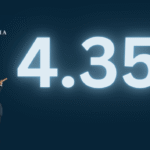
Given we saw a strong employment report (~40K jobs created in the month) and fairly robust household spending (+1.3% for the month), it is difficult to see this being a system-wide phenomenon just yet, although it is something we’ll have to watch closely. The RBA does have a lot of firepower, with cash rates at 4.35%, and thus it can shift from hawkish (inclined to hike) to dovish (inclined to cut) if required.
Investment Outlook
You may have noticed property prices have begun to fall. The falls thus far are small. The budget is something of a proximate cause. Potential changes to negative gearing, and capital gains tax, encountered affordability issues, cost of living pressures, a negative supply shock alongside a dramatic repricing of interest rates. Australia’s Achilles heel lies in the mix of indebtedness, and the pre-existing elevated valuations, which on a mean and median basis, sit around 12-13x for Sydney. That’s very high.

So, we should keep a close eye on developments there. Turning back to the AI story, we remind ourselves of what the capital expenditure program looks like, with the most recent bar being year-to-date spending.

Our worry is that the mind-bogglingly large amounts of capital expenditure winds up producing a sub-WACC (weighted average cost of capital) type return. China has pretty good AI models, that are open source and can sit locally, so you don’t have to worry quite so much about the data security or integrity. China’s leading AI companies seem very happy to share their models, and charge pricing that is a fraction of their US counterparts. Since the models are “good enough” (our framing), and since the vast majority of AI users won’t need the frontier models (to say, read and reply to an email, or some other relatively modest use case) it is quite possible that pricing comes down in general. We also think that most AI users won’t require a generalist model that can do everything, but rather a series of tiny specialist ones. And that probably means a proliferation of context specific models that are very cheap for the industries that they are applicable to.
To be clear, we aren’t saying it’s a bubble. We think the AI technology will work out broadly well (certainly better than we’d thought up until recently) but not every company will reap the gains. Rather the benefits will accrue to consumers across the economy (a “rising tide lifts all boats”) and thus we’ll benefit just by having a broad and diversified level of index exposure, rather than concentrated bets on a handful of purported AI winners that we can’t be totally sure that we’ll pick ahead of time anyway. The future, with regards to use cases, is simply too fluid for now.
Important Information from EWK Investment Committee
This document is based on information available at the time of publishing, information which we believe is correct and any opinions, conclusions or forecasts are reasonably held or made as at the time of its compilation, but no warranty is made as to its accuracy, reliability or completeness. To the extent permitted by law, neither EWK , Aequitas nor any of its affiliates accept liability to any person for loss or damage arising from the use of the information herein.
Past performance is not a reliable indicator of future performance.
General Advice Warning: This document has been prepared without taking into account your objectives, financial situation or needs, and therefore you should consider its appropriateness, having regard to your objectives, financial situation and needs. Before making any decision about whether to acquire a financial product, you should obtain and read the relevant Product Disclosure Statement.