

What It Means for Your Wealth Plan
Australia is in the early stages of the largest transfer of wealth it has ever seen. Over the next two decades, trillions of dollars will move from one generation to the next — and for many families, an inheritance will end up shaping their financial future more than almost any other single event.
Yet most households still don’t talk about it.
A Wealth Transfer Measured in Trillions
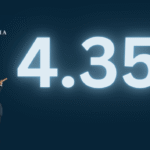
Estimates vary depending on the methodology, but they all point the same direction. The Productivity Commission’s 2021 modelling put likely wealth transfers from Australians aged 60 and over at around $3.5 trillion over 20 years — roughly $175 billion a year. JBWere’s 2024 analysis came in higher again, at $5.4 trillion over the same period.
Whichever figure proves closer to the mark, the source of that wealth is well understood: mostly baby boomers (those born between the end of World War II and 1964) passing assets to their children and other beneficiaries — family homes, investment properties, superannuation, shares, and other holdings built up over a working life.
The scale of this shift matters. As of the March 2026 quarter, total Australian household wealth stood at roughly $19.2 trillion, having grown by $224.9 billion in that quarter alone, driven mainly by rising property values. Superannuation balances actually dipped slightly in the same period, a reminder that the composition of this wealth — and therefore of future inheritances — shifts with markets, not just with time.
Why Superannuation Balances Often Outlive Their Owners
One detail tends to surprise people: much of this transferred wealth wasn’t intended to be inherited at all — it’s simply what’s left over.
The 2023 Intergenerational Report found that most retirees draw down their superannuation at the legislated minimum rate rather than spending it. Modelling suggests a single retiree following the minimum drawdown schedule could still hold around a quarter of their retirement savings at death. Treasury’s 2020 Retirement Income Review projected that unspent superannuation death benefits could climb toward $130 billion a year by 2059 if drawdown habits don’t change.
In other words, a meaningful share of the coming wealth transfer isn’t deliberate estate planning — it’s the natural by-product of retirees being cautious with their savings. That has implications both for the retiree (is their money working as hard as it could during their lifetime?) and for their beneficiaries (do they understand what they stand to receive, and when?).
A Conversation Most Families Avoid
Australia’s household wealth is substantial by global standards — recent international comparisons continue to rank the country near the top of the world for median wealth per adult. There’s a lot of value sitting in Australian homes, super accounts, and portfolios, and a lot of it will eventually change hands.
Despite that, inheritance planning rarely gets the structured attention that, say, business succession planning does. Death and the division of assets are uncomfortable topics, particularly in blended families or where beneficiaries might disagree about fairness. But the families who do talk about it openly tend to avoid the disputes, surprises, and delays that otherwise follow a death.
A few practical steps make the biggest difference:
A current, valid will that clearly sets out how assets should be managed and divided.
A binding death benefit nomination with your super fund, so your balance is distributed according to your wishes rather than left to trustee discretion.
A conversation with beneficiaries about intentions — not necessarily dollar figures, but the broad shape of the plan — so nobody is caught off guard.
Property and superannuation together make up the large majority of most household balance sheets, and typically the large majority of most inheritances too. That makes getting the paperwork right on those two asset classes the highest-priority item on most estate plans.
The Tax Question Is More Complicated Than It Looks
Australia doesn’t have a formal inheritance or estate tax — but that doesn’t mean inheritances always arrive tax-free.
Superannuation is the clearest example. Death benefits paid to a spouse or a dependent child are generally tax-free. Paid to a non-dependent — which, for tax purposes, includes most financially independent adult children — the taxable component can attract tax of up to 17%, and up to 30% (plus Medicare levy) on any untaxed element, such as an insurance payout inside super. Families are often surprised to discover this only after the fact, because the tax is typically withheld before the benefit is even paid out, so it never shows up as a separate, visible deduction.
There’s also a newer development worth factoring in for larger balances: legislation introducing Division 296 tax on superannuation balances above $3 million (with a further threshold at $10 million) passed the Senate in March 2026 and takes effect from 1 July 2026. For households with significant super wealth, this changes the calculus around how much is efficient to hold inside super versus other structures — and it’s a conversation worth having well before it affects an estate.
Beyond super, inherited property and financial securities can carry their own tax consequences depending on how and when they’re eventually sold.
Where This Leaves You
None of this needs to be sorted out alone. Estate planning sits at the intersection of legal documentation, tax rules, and family dynamics — and getting professional advice early tends to save both money and stress later.
If you’d like help thinking through what an inheritance — giving or receiving one — means for your broader financial plan, that’s a conversation worth having sooner rather than later.
Important information
This article is general information only and does not take into account your personal objectives, financial situation, or needs. Before acting on any information here, consider its appropriateness in light of your own circumstances, and seek advice from a suitably qualified financial adviser. Past performance is not a reliable indicator of future performance. While care has been taken in preparing this article, [Firm name] accepts no liability for any errors or omissions.
Sources: Productivity Commission (2021); JBWere Australia (2024); Australian Bureau of Statistics, National Accounts: Finance and Wealth, March 2026; Australian Government, 2023 Intergenerational Report; Australian Government, 2020 Retirement Income Review; Treasury Laws Amendment (Building a Stronger and Fairer Super System) Act 2026.